Markets
Euro falls below 91 lek for the first time: official rate 90.77, annual decline reaches 6.2%
The European currency lost another 33 qindarka in a single day, while last week's unrest has not boosted demand for foreign currency.
By ANN Newsroom · Newsroom
October 20, 2026, 14:30 · Updated 12:21 · 2 min read

In brief
- The Bank of Albania set the official euro rate at 90.77 lek on Tuesday, the lowest level ever.
- Compared with a year ago, the euro has depreciated by 6.2%, the fastest pace this year.
- Exchange dealers link the decline to a high supply of foreign currency and weak demand for euros.
The euro has crossed another psychological threshold against the lek. According to the official exchange rate published by the Bank of Albania on Tuesday, Oct. 20, the European currency traded at 90.77 lek, 0.33 lek less than a day earlier. It is the first time the official rate has dropped below 91 lek.
The decline has picked up pace this week. On Oct. 14 the euro had touched 91.3 lek, while on Monday it was around the 91-lek mark. The annual depreciation, according to reports from the local market, has reached 6.2%, the highest level for 2026. The U.S. dollar also fell to 80.90 lek, and the Swiss franc to 98.11 lek.
Why the unrest did not change the trend
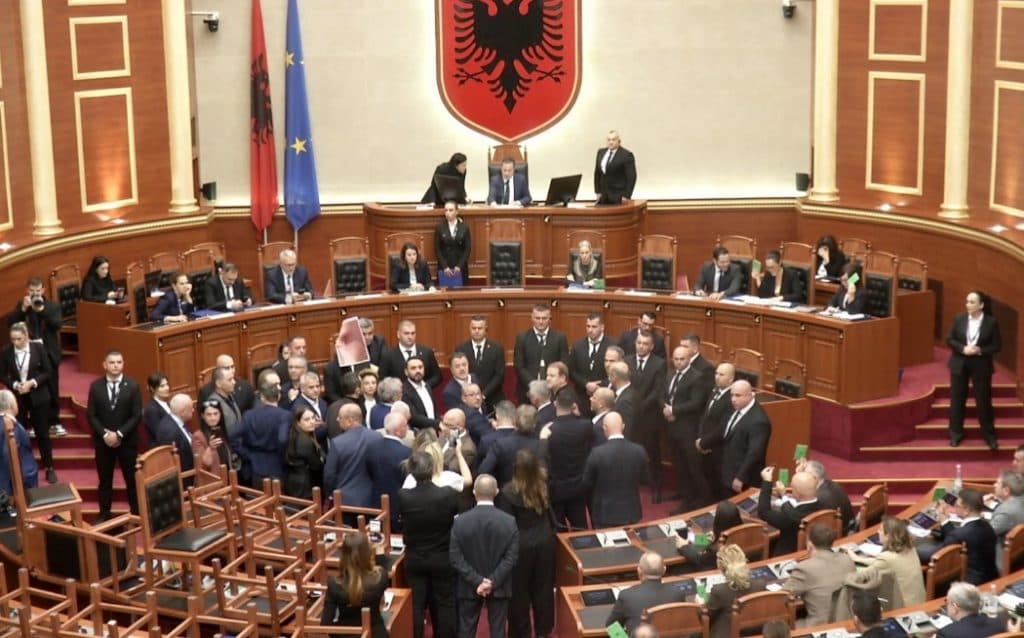
In times of uncertainty, Albanians usually turn to the euro as a safe haven, which temporarily pushes up its rate. This time, despite violent protests in Tirana and other cities and damage to bank branches, that effect has not been seen. Exchange dealers cite as causes the high supply of foreign currency from tourism, payments with foreign cards, foreign investment and foreign-currency income of financial institutions.
On the other hand, demand for euros remains weak. More and more loans, especially to individuals, are taken out and repaid in lek, while real estate prices are also increasingly set in the local currency.
The Bank of Albania has explained the lek's strengthening mainly by the performance of the economy's external position. In the first half of the year, the current account deficit narrowed by about 41% compared with last year, while foreign direct investment reached 1.144 billion euros, a 50% increase. For exporters and families living on remittances, this means fewer lek for every euro earned.